
Last updated: November 2026
Do you have to pay for Duolingo? If you just want the answer, here it is.
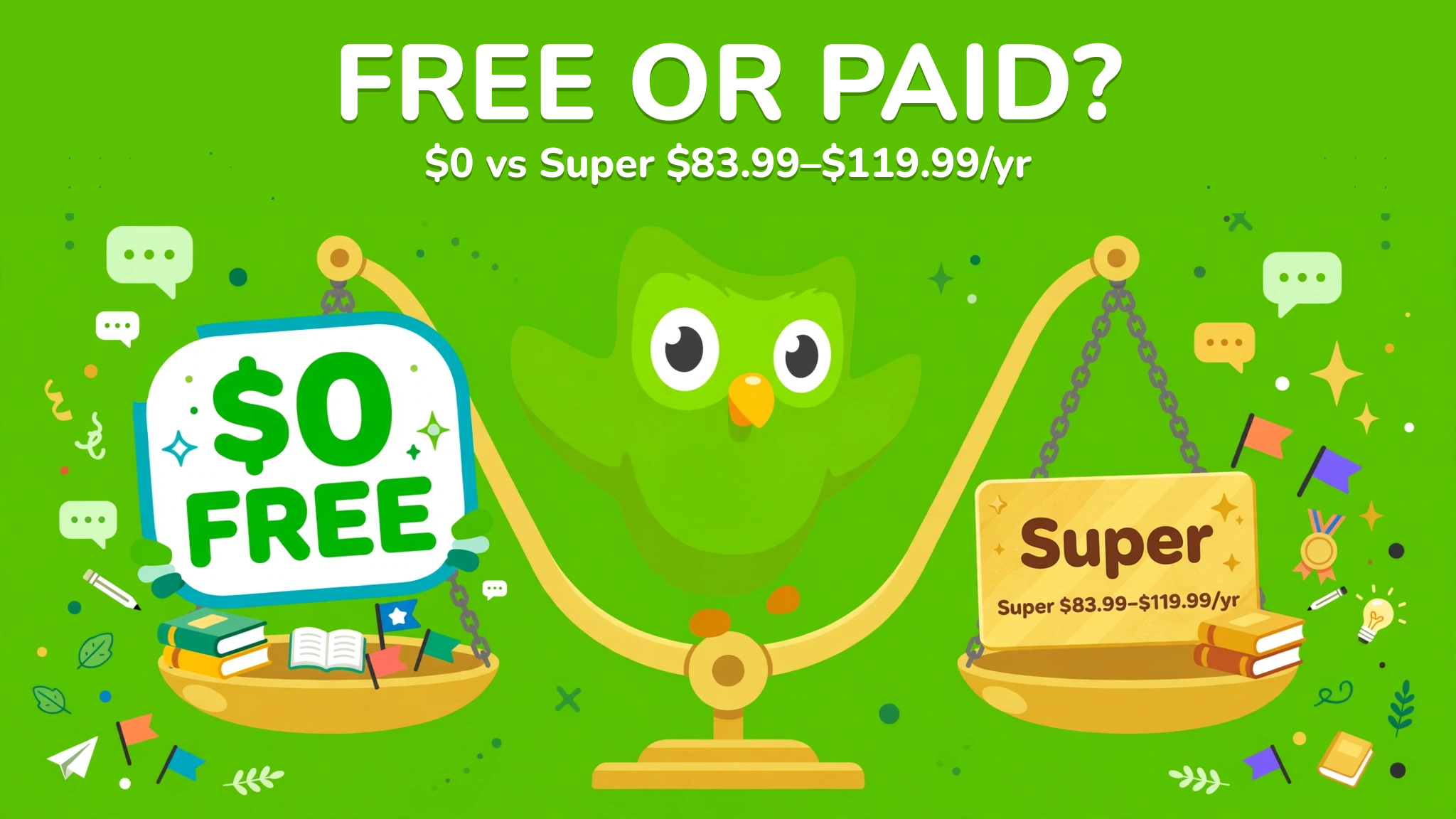
No, you do not have to pay for Duolingo. Every lesson in every course is free. Paying for Super only removes ads and the daily practice limit. It does not unlock extra lessons. About 9 in 10 Duolingo users never pay anything.
That is the short answer. The rest of this guide explains what is free, what paying actually removes, what Super costs in 2026, who should pay — and who should not. If you want the deeper guide to learning free, read Duolingo Free: Learn a Language for Free in 2026, and for the “is it really free?” question in full, see Is Duolingo Really Free? Free vs Super in 2026.
Here is what we will cover:
- What is free on Duolingo
- What paying for Super removes
- What Super costs in 2026
- Super Family: paying together
- What happened to Duolingo Max
- Who should pay — and who should not
- How to try Super free (and cancel safely)
- FAQs
What Is Free on Duolingo?
Duolingo’s whole idea is that language education should be free. The free version gives you the full course — not a sample of it.
- All 40+ language courses, from Spanish and French to Japanese and Korean
- Every lesson and level — reading, writing, listening, and speaking practice
- Stories in select languages, for reading in context
- Streaks, leagues, XP, and challenges — the game side costs nothing
- Explain My Answer — free for all learners since 1 January 2026
- Practice Hub — free for all learners since 18 February 2026
- Math and Music courses, free alongside languages
In Q2 2026, Duolingo had about 140.6 million monthly users and 12.7 million paying subscribers. The free plan is not a side product — it is how most people use Duolingo.
What Does Paying Actually Remove?
Paying does not add lessons. It removes two annoyances and adds a few conveniences:
| What changes | Free | Super (paid) |
|---|---|---|
| Ads | Short ads between lessons | No ads |
| Daily practice limit | 25 energy a day on mobile (some accounts still use 5 hearts) | Unlimited energy / unlimited hearts |
| Offline lessons | No | Yes — download lessons and study without internet |
| Legendary Levels | Limited attempts | Unlimited attempts |
| Streak Repair | No | Yes — once a month |
| Personalised practice | Limited | Full access |
| Lessons and courses | All of them | All of them — the same ones |
The key point: paying removes friction, not locked content. If someone tells you a lesson is “only for paying users”, that is not true. Duolingo’s own App Store listing says it plainly: “every course is free.”
What Does Super Cost in 2026?
There is no single fixed price. Duolingo publishes no price list, and the price you see depends on your account, your device, your country, and the test Duolingo is running. Always check the price on your own checkout screen before you pay.
In the US, Super currently costs about:
- Monthly: about $12.99–$13.99 a month
- Yearly: about $83.99–$119.99 a year — much cheaper per month than paying monthly
- Super Family: about $119.99–$143.99 a year for up to 6 accounts
Paying monthly for a year at $12.99 costs about $156. The $83.99 yearly plan costs about $7 a month instead — a saving of about $72. So if you plan to keep Super, pay yearly.
A cheaper test plan called Lite (also called Super Lite) is also appearing on some accounts at about $35.99 a year. It keeps the ads and doubles your energy to 50 a day instead of removing the limit. You may not see it — it is still a test.
For the full price breakdown with monthly vs yearly maths, see Duolingo Plus Cost in 2026: Super Prices & Savings. For the full answer to what Super costs overall, see Does Duolingo Cost Money? Super, Family & Free Prices 2026.
Super Family: Paying Together
If more than one person in your house learns on Duolingo, the Family plan is the cheapest way to pay. Super Family costs about $119.99–$143.99 a year and covers up to 6 accounts — you plus 5 family members or friends.
At $119.99 a year, that is $20 per person per year — about $1.67 a month each. Each person keeps their own account, progress, streak, and language. One person (the family manager) pays the single annual fee.
Two people paying for individual yearly plans would cost about $168–$240 a year. One Family plan costs less and covers up to six. See Duolingo Family Plan 2026: Cost, Setup & Benefits.
What Happened to Duolingo Max?
You cannot buy Duolingo Max anymore. In its Q3 2026 shareholder letter (3 November 2026), Duolingo said it will stop selling new Max subscriptions in November 2026. If you are choosing a paid plan today, the plan is Super, not Max.
Max was the top plan above Super. It added AI features — Video Call and Roleplay — and used to cost about $29.99 a month or $168 a year in the US. Duolingo is moving Video Call into Super instead, with unlimited Video Call reaching all Super subscribers by the end of 2026.
If you already pay for Max, Duolingo moves individual Max users to a Super Family plan at the same price. Max Family options will be addressed in 2027. For the full story, see Duolingo Max Is Discontinued (2026): What Next?
Who Should Pay — and Who Should Not
You should consider paying if:
- You study every day on your phone and the 25-point energy limit keeps stopping you
- Ads between lessons break your focus
- You travel or commute and want offline lessons
- You have a long streak and want the monthly streak repair as insurance
You should not pay if:
- You do one short lesson a day — you will rarely hit the energy limit
- You mostly study on the web, where there is no energy limit at all
- You hope paying will teach you more — the lessons are identical on the free plan
- You are on a tight budget — free Duolingo plus shows, podcasts, and real conversation will take you further than Super alone
Be honest about which group you are in. Most learners are in the second group. And remember: paying for an app does not make you fluent. Daily practice and real speaking do.
How to Try Super Free (and Cancel Safely)
Not sure? Try before you pay. Duolingo offers a free trial of Super — usually 1 week on the web or 14 days in the app stores, though the exact length varies by account. During the trial you get all Super features: no ads, unlimited energy, offline lessons.
Three rules for the trial:
- Cancel at least 24 hours before the trial ends if you do not want to be charged
- Cancel where you subscribed — Apple Settings, Google Play, or the Duolingo website, depending on where you signed up
- Deleting the app does NOT cancel the plan — you will keep being charged
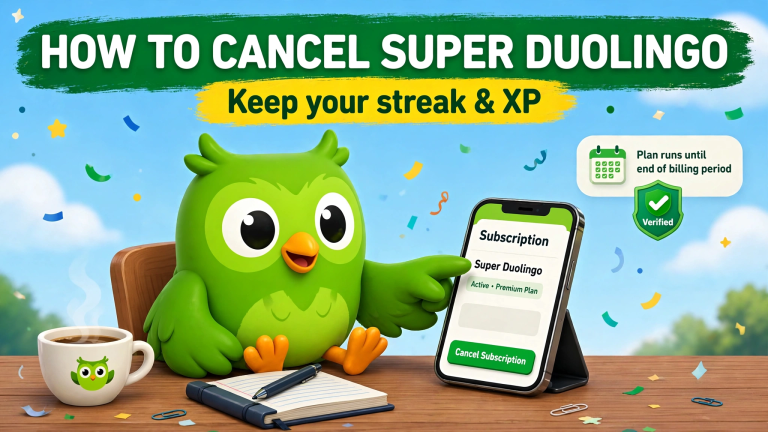
If you cancel, you keep Super until the end of the trial or billing period, then go back to free. You do not lose your progress, XP, or streak. Full steps: How to Cancel Super Duolingo: Easy Steps (2026).
Frequently Asked Questions
Do I have to pay for Duolingo to learn a language?
No. Every lesson in every course is free. Paying only removes ads and the daily energy limit. You can learn a language on the free plan if you study regularly.
Is the Duolingo app free to download?
Yes. The app is free to download on iOS and Android, and the web version is free too. You only pay if you choose a Super subscription or a free trial that turns into one.
What do I lose if I cancel Super?
Ads come back, the daily energy limit comes back, and downloaded lessons stop working. You keep your progress, XP, streak, and all completed lessons.
Can I still buy Duolingo Max?
No. Duolingo stopped selling new Max subscriptions in November 2026. Its main feature, Video Call, is moving into Super. If you already have Max, Duolingo moves individual Max users to a Super Family plan at the same price.
Is there a cheaper plan than Super?
A test plan called Lite (Super Lite) is appearing on some accounts at about $35.99 a year. It keeps the ads and doubles your energy to 50 a day. You may not see it — it is still a test. Students may also get a discount on Super’s annual plan (reported at about 50% off); check the offer in your own account.
Is Duolingo worth paying for?
It is worth it if the free plan’s limits are what stop you studying. It is not worth it if you hope it will teach you more, because the lessons are the same. Read our honest review: Is Super Duolingo Worth It in 2026?
The Bottom Line
No, you do not have to pay for Duolingo. The free version teaches the same lessons as the paid plans, and about 9 in 10 users learn for free. Ads and the daily energy limit are the trade-off — and the web version has no energy limit at all.
Pay for Super only if you study daily on your phone and the limits keep getting in your way. Try the free trial first, pay yearly if you stay, and cancel where you subscribed if you change your mind. Start free, learn daily, and pay only when free starts to slow you down.